
The question, O me! so sad, recurring – What good amid these, O me, O life?
Answer.
That you are here – that life exists and identity,
That the powerful play goes on, and you may contribute a verse.
Excerpt from O Me! O Life! by Walt Whitman, 1867
These words by poet Walt Whitman, which question and answer the meaning of life during a time of momentous change, resonate profoundly today. More than 150 years later, we, like Whitman, live in a period similarly marked by great change. Amidst this uncertainty, two contemporary thinkers stand tall and remind us of our potential, calling us to contribute our verse to a grand, powerful play.
Though differing in approach, these thinkers converge on the urgent need for personal and collective transformation, offering complementary frameworks to help reconnect humanity with meaning. Drawing on ancient philosophy, contemporary science, and evolutionary narratives, Professor of Psychology and Cognitive Scientist Dr John Vervaeke and writer and poet Brendan Graham Dempsey present pathways to re-enchantment through connection with the numinous and transcendent.
This blog, true to the metamodern spirit in which The Parrhesia Diaries are written, attempts a creative synthesis: combining Vervaeke’s pluralist, evidence-based practices with Dempsey’s mythopoetic and aspirational metaphysics. Readers are invited to approach this integration with nuance, and to use their own good judgement in distinguishing between what is empirically grounded and what is symbolically framed. What follows, then, is offered in ironic sincerity: a practice schedule for fulfilling our purpose in the most powerful play of all – the awakening Universe.
John Vervaeke: Ecologies of Practice and Tonos

John Vervaeke
The question, O me! so sad, recurring
– What good amid these, O me, O life?
John Vervaeke prescribes “ecologies of practice” as systems designed to restore meaning in a world fractured by rationalism and the “death of God” – historical shifts rooted in the Enlightenment, when religious narratives, communal rituals, and shared moral codes were dismantled. These frameworks, which once provided a coherent sense of purpose, were built around what Vervaeke calls the “Three Orders“: the Nomological Order (the cosmos’s rational and meaningful structure), the Narrative Order (the story of God’s love and humanity’s place within it), and the Normative Order (the path of moral and spiritual ascension toward the divine). These orders were deeply intertwined, offering a world that was not only rational and beautiful but also inherently meaningful and valuable.

With the rise of scientific rationalism and individualism during the Enlightenment, along with the advent of capitalism and industrialisation, and the spread of secularisation, these tightly integrated orders were severed. Meaning was no longer primarily inherited but also constructed, and while these new paradigms ushered in remarkable progress, individuals were left untethered, struggling to reconcile modern freedom with the loss of shared, transcendent purpose. The existential uncertainty of the present reflects this fragmentation and the longing for a coherent place within a larger, meaningful whole (Disenchantment).
Vervaeke proposes that his ecologies of practice offer a way out of existential uncertainty by guiding individuals toward deeper connections with themselves, their communities, and the wider world. By increasing flow and insight, these practices help reclaim a sense of purpose and illumination. Known as ‘DIME’ – an acronym for Dialogical, Imaginal, Mindfulness, and Embodied – this system integrates practices drawn from the ‘4E Framework’ in cognitive science, providing an integrated approach to personal development, well-being, and the reclamation of meaning.
| Concept | Definition | Purpose |
|---|
| Dialogical | Highlights dialogue’s role in understanding | Forms deeper insights & connections through meaningful conversations. |
| Imaginal | Explores imagination’s impact on perception | Stimulates creative & symbolic thinking beyond conventional boundaries. |
| Mindfulness | Focuses on presence and awareness | Enhances emotional regulation & clarity through observation of thoughts. |
| Embodiment | Emphasises the body’s role in understanding | Links physical presence to cognitive growth through bodily awareness. |
The 4E Framework emphasises that human thought is not an isolated process confined to the brain. Rather, cognition “emerges” (👈 remember this word ) through dynamic interactions that are:
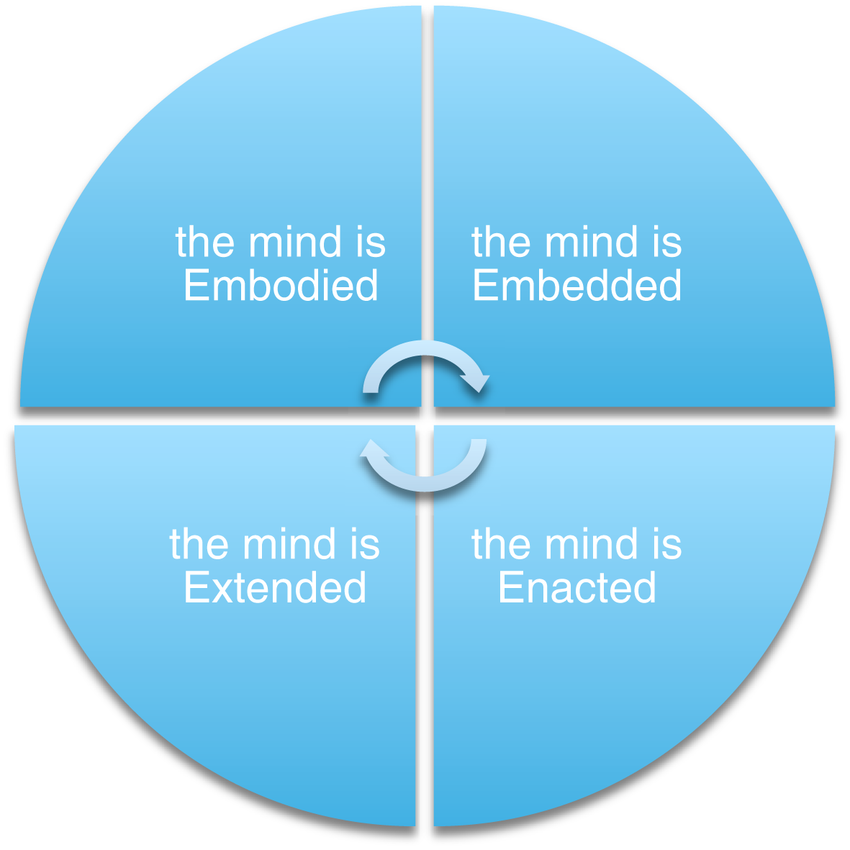
Embodied in our senses and in our lived physical reality
Embedded in a cultural and social context
Extended across tools, devices, and collaborators
Enacted through experiential problem-solving
Definitions taken from Integral Leadership: Embodied, Embedded, Enacted and Extended
By integrating these elements, Vervaeke shows how meaning can be reconstructed in practices that connect the body, mind, and environment. These practices counteract the fragmentation of modern life by cultivating self-awareness, building community, and developing what he refers to as tonos – a Greek word meaning creative tension between human limitations and aspirations for transcendence. In navigating this tension, Vervaeke contends that we can avoid extremes like hubris or nihilism while finding balance in a grounded, purposeful existence.
To reclaim meaning, Vervaeke emphasises that practices must be self-correcting, mutually reinforcing, and based on robust science. Distilled here into five key propositions:
- Integrated Practices: Create ecologies of practice that balance worldview, care, and action, incorporating Dialogical, Imaginal, Mindfulness, and Embodied domains.
- Scientific and Complementary Foundations: Ground practices in scientific principles and ensure mutual reinforcement for self-correction.
- Community Character: Prioritise overcoming self-deception, enhancing flourishing, and developing meaningful connections with greater purposes.
- Creative Balance: Maintain a tension between human finitude and transcendence, avoiding extremes like complacency or despair.
- Collaboration and Sustainability: Develop sustainable communities or subcultures that support collective growth and flourishing.
With his approach, Vervaeke offers us not just a response to the loss of meaning but a pathway to wisdom, deeper connections, and an enriched life experience. His framework equips us with the tools to navigate modernity’s challenges while reintroducing transcendent purpose, albeit without recourse to the doctrine and dogma of organised religion.
The question, though, remains: How do we situate these practices within a broader, cosmic context? While Vervaeke’s framework offers us tools for meaning-making, Dempsey’s Emergentism expands this vision by reintegrating the fragmented “Three Orders” into a grand, evolutionary narrative. By placing individual and collective growth within the unfolding story of cosmic awakening, we gain a metaphysical lens that bridges Vervaeke’s work with a universal, transcendent purpose.
Brendan Graham Dempsey: Emergentism and the Wisdom Stack

Brendan Graham Dempsey
Answer.
Brendan Graham Dempsey’s metaphysical framework, known as Emergentism (remember “emerges”), situates human beings as integral participants in the unfolding complexity of the cosmos. Informed by the work of Bobby Azarian, cognitive neuroscientist and author of The Romance of Reality: How the Universe Organizes Itself to Create Life, Consciousness, and Cosmic Complexity, Dempsey’s Emergentism sees the Universe as an evolving system that is awakening. Drawing on Gregg Henriques’ UTOK Tree of Knowledge System, he traces this evolution through levels of Matter, Life, Mind, and Culture. At each stage, consciousness deepens, bringing us, ultimately, to humans as self-aware agents uniquely positioned to contribute with intention to this cosmic evolution.

UTOK Tree of Knowledge System
Central to Emergentism is the concept of telos (another Greek word 🙄), which means a purposeful direction inherent in the Universe’s ongoing evolution. Dempsey asserts that the Universe’s awakening offers humanity profound meaning, situating our lives within a grand narrative of integration and transcendence. Aligning with this trajectory allows individuals to see their actions as part of the cosmos’s evolution toward greater complexity and harmony, imbuing life with an intrinsic purpose beyond mere survival or routine.
Emergentism also reintegrates these orders by providing a unifying vision where the physical structure of the cosmos (nomological) supports a story of universal evolution (narrative), which in turn inspires ethical actions and creative contributions (normative). In this way, Emergentism offers a metaphysical lens and a practical and existential guide to living meaningfully within the Universe’s unfolding story.
Dempsey’s Wisdom Stack lies at the heart of this practical application. It integrates principles of Material Organisation, Vitality, Emotional Embodiment, and Cultural Cultivation to harmonise the physical, mental, and spiritual dimensions of life. Working bottom up, let’s briefly consider each in turn.

Wisdom Stack
- Matter (Material Organisation): Respect for the foundational elements of existence, cultivating order and clarity in our physical environments.
- Life (Vitality): Engagement with practices that promote health and energy, recognising the interdependence of living systems.
- Mind (Emotional Embodiment): Cultivation of self-awareness and emotional balance through mindfulness, reflection, and somatic practices.
- Culture (Cultural Cultivation): Contribution to shared understanding and creativity through dialogue, storytelling, and community-building.
By bringing these elements together, Emergentism bridges individual and collective action while enabling conscious participation in the awakening of the Universe. Through these practices, we become co-authors of the evolutionary narrative, embracing the profound opportunity to align our daily actions with the broader trajectory of cosmic evolution.
Dempsey’s framework complements Vervaeke’s ecologies of practice and expands them, offering a metaphysical vision that places personal transformation within the grandest of contexts. While Vervaeke equips us with tools to navigate the fragmentation of modern life, Dempsey reminds us that these tools serve a larger purpose: the awakening of the Universe itself.
Emergentism as a Way of Life
That you are here – that life exists and identity,
Foundational Principles
The Universe is an evolving, self-organising Whole, moving toward greater complexity, consciousness, and harmony. As active participants in this unfolding, we align our lives with its deeper patterns by embracing metanoia – (final Greek word, I promise 😮💨) a transformative shift in perspective towards an intentional, values-driven way of living. Emergentism as a way of life calls for integrating wisdom practices that balance mind, body, and environment, thereby cultivating clarity, purpose, and a meaningful connection to existence.
The Ecology of Practice Framework
Emergentism brings together Vervaeke’s ecologies of practice and Dempsey’s levels of complexity. Practices are organised into four domains – Dialogical, Imaginal, Mindful, and Embodied (DIME) – to promote integration across cognitive and experiential dimensions. These interconnected practices counter modern fragmentation by cultivating connection and meaning.
Levels of Practice
- Matter (Organisation)
- Principle: Matter is the foundation of all emergence. Respecting and organising it is essential to growth.
- Practices: Create structured environments that encourage clarity and focus. Establish sacred spaces (e.g., altars), symbolising reverence for existence. Reflect on humanity’s cosmic origins and our connection to the Universe as stardust.
- Life (Vitality)
- Principle: Life thrives through vitality, health, and growth. Intentional actions deepen our connection to living systems.
- Practices: Prioritise good nutrition, regular physical activity, and somatic practices. Honour biological interdependence through ecological mindfulness or permaculture.
- Mind (Embodiment)
- Principle: Awareness and emotional regulation broaden intentionality, helping individuals navigate complexity with clarity.
- Practices: Engage in meditation, sensory awareness, and contemplative journaling. Explore responsible use of entheogens (e.g., psilocybin, MDMA) in sacred contexts for expanded consciousness. Use yoga, dance, or breathwork to align mind and body.
- Culture (Cultivation)
- Principle: Culture is humanity’s unique contribution to the Universe’s self-awareness and complexity. Thriving cultures encourage collaboration, creativity, and wisdom.
- Practices: Participate in dialogical practices (e.g., Socratic dialogue, Circling). Strengthen community through storytelling and shared rituals. Engage in creative pursuits like art or music that enrich cultural vitality.
Domains of Practice (DIME)
- Dialogical: Develop insights through meaningful conversations and relational practices.
- Imaginal: Use imagination to explore deeper layers of meaning and enrich perception.
- Mindful: Cultivate present-moment awareness to enhance clarity and emotional balance.
- Embodied: Integrate physical movement and awareness to anchor experience in the body.
Weekly Emergentist Practice Schedule
That the powerful play goes on, and you may contribute a verse.
Each day incorporates activities balancing physical vitality, mindfulness, creativity, and community connection. Mornings focus on embodiment and mindfulness, middays on reflection and creativity, and evenings on community and contemplation.
- Morning Focus: Embodied practices (e.g., Tai Chi, yoga, strength training) paired with mindfulness or meditation to align body and mind.
- Midday Reflection: Reflective or creative activities (e.g., journaling, sketching, mindful walks). Connect with the natural world to deepen awareness.
- Evening Engagement: Communal or contemplative practices such as Socratic dialogue, gratitude reflections, or shared rituals. End the day with creative pursuits or philosophical discussions.
Key Design Features
- Daily Self-Reflection/Correction: Evaluate your practices regularly to ensure alignment with your values and goals.
- Harmonised Practices: Rotate contemplative, active, imaginal, and dialogical exercises to maintain a dynamic, well-rounded approach.
- Community Connection: Engage with others through shared rituals or collaborative projects to build supportive relationships.
- Creative Tension (Tonos): Embrace the interplay between human limitations and aspirations in all reflections and actions.
Emergentism invites us to co-create a meaningful existence by contributing our unique verse to the grand narrative of awakening. Through this adaptable system, we align personal growth with the Universe’s evolutionary trajectory.
Weekly Emergentist Life Example Schedule
| Day | Focus | Morning | Midday | Evening |
|---|
| Monday | Organisation, embodiment, & mindfulness | Body: Tai Chi or yoga (30 mins) Mind: Vipassana meditation (15 mins) | Activity: Declutter or organise a small space Reflection: Material order & internal balance | Community: Dialogue practice Reflection: Mindfulness walk outdoors, reflecting on nature |
| Tuesday | Physical vitality, creativity, & relational practices | Body: Strength or endurance training (30 mins) Mind: Loving-kindness meditation (20 mins) | Activity: Sketch or journal on vitality & connection Reflection: Life force & biological interconnection | Community: Circling discussion Reflection: Journal about self-deception & overlooked truths |
| Wednesday | Practical application, learning, & balance | Body: Tai Chi or mindful movement (20 mins) Mind: Sensory meditation (10 mins) | Activity: Listen to a podcast or audiobook on complexity or systems thinking Reflection: Applied ideas & worldview | Community: Create or refresh a sacred space Reflection: Meditation on cosmic origins |
| Thursday | Cultivating imagination, non-dual awareness, & community | Body: Aerobic exercise (30 mins) Mind: Mindfulness meditation (20 mins) | Activity: Reflect on creative tension between limits & aspirations Reflection: Shaping growth and purpose | Community: Outreach to collaborators or shared project review Reflection: Visualise role in cosmic flourishing |
| Friday | Advancing knowledge, self-expression, & community | Body: Yoga or gentle stretching (15 mins) Mind: Study a philosophical or spiritual text | Activity: Jot down ideas for a creative or collaborative project Reflection: Weekly insights & alignment with purpose | Community: Host or join a discussion on ethics or culture Reflection: Gratitude practice, focusing on collective growth |
| Saturday | Connection to nature, creativity, & playfulness | Body: Gardening, permaculture activity, or a hike in nature Mind: Reflect on connection to the biosphere | Activity: Pursue a creative project (e.g., storytelling, music) Reflection: Joy & spontaneity of the week | Community: Casual gathering with ritual storytelling or music Reflection: Journal on harmony & connection |
| Sunday | Rest, renewal, & transcendence | Body: Gentle yoga or stretching Mind: Contemplative meditation (20 mins) | Community: Shared ritual with loved ones (e.g., candles, affirmations) Reflection: Visualise the evolving role in awakening | Community: Shared ritual with loved ones (e.g., candles, affirmations) Reflection: Visualise our evolving role in awakening |
For a detailed guide to this Weekly Emergentist Life Practice Schedule, refer to the full document.
My blueprint for living integrates Brendan Graham Dempsey’s Emergentism and John Vervaeke’s wisdom guidance into a practical life schedule – an ironically sincere framework that celebrates humanity’s unique role in the Universe’s process of awakening. It invites us to live not just for ourselves but for the Whole, to contribute our distinct voices to life’s evolving narrative, and to fulfil Whitman’s timeless insight: that life exists, the powerful play goes on, and we each are blessed with the opportunity to contribute a verse.
What will your verse be?

 The Parrhesia Diaries