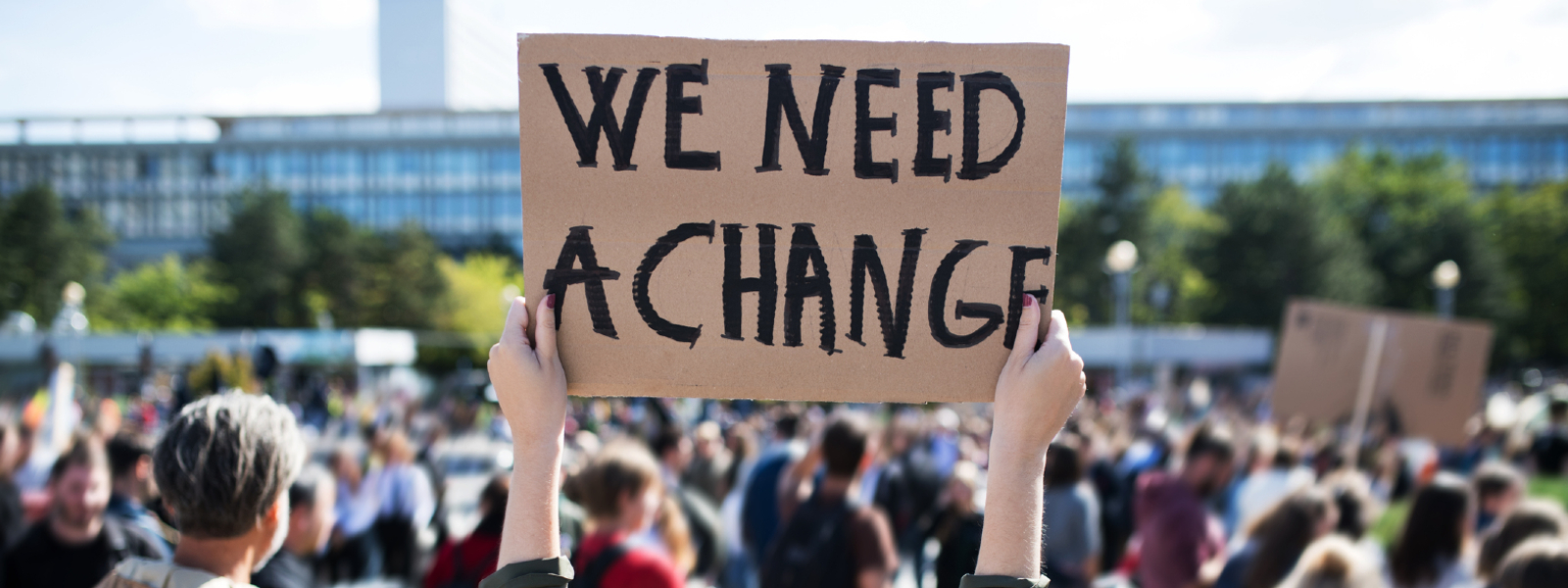
Liberalism is dead. At least it should be. It has long outlived its usefulness as the dominant political paradigm and no longer serves as the leading edge of progress. Liberal economics has overreached, driving inequality, monopolisation, and insecurity. Liberal social policy has likewise overreached, fuelling division, weakening shared norms, and placing institutions under strain. Together, these failures suggest the liberal settlement has reached its limits and requires correction.
British politics now sits in a clear gap. There is growing support for a more economic intervention, alongside increasing unease with a social model that treats cohesion, duty, and national identity as optional. Yet no major party speaks convincingly to both instincts at once.
Post-liberalism rejects this false choice. It recognises that markets are useful but must be constrained, and that freedom depends on shared norms and strong institutions. Drawing on (and slightly updating) an earlier piece, The Gap in British Politics – and What Should Fill It, what follows are thirty concrete principles outlining how such a settlement might begin to fill that gap.
Economic Renewal
1. It would not be the Liberal Democrats, nor a form of reheated Blairism.
2. It would be socially conservative and economically progressive.
3. Pro-wealth creation, while also aiming to close the gap between the rich and poor.
4. Progressive tax reform, with rates not set so high as to be self-defeating.
5. Challenge liberal “over-reach” head-on.
6. Offer an economic programme based on full employment, growth, and investment.
7. Pro-public sector and pro-market sector, recognising both as complementary rather than opponents.
8. Pro-nationalisation, with public ownership of gas, water, and electricity as a central policy.
9. Subject banks to tougher regulation in favour of the consumer.
10. Tackle the housing crisis through a new council house-building programme.
Social & Cultural Cohesion
11. Aim to build a coalition of support between working-class and middle-class voters.
12. Eschew liberal buzzwords such as “diversity”, “inclusivity”, and “fairness”, and instead speak of family, place, and tradition.
13. Emphasise responsibilities as much as personal rights.
14. Fraternal and communitarian, rejecting toxic and divisive identity politics.
15. Abolish the House of Lords and establish an English Parliament outside London.
Governance & Reform
16. Support electoral reform.
17. Remove privatisation from the NHS.
18. Accept Brexit as settled and focus on improving economic outcomes and relations with Europe.
19. Be implacably anti-austerity, recognising that deep cuts to public expenditure are counterproductive in a faltering economy.
20. Be uncompromisingly anti-racist.
State, Society & Immigration
21. End the predominance of financial services at the expense of a productive economy, making industrial renewal a central economic goal.
22. Accept that, despite good intentions, the multiculturalism experiment has failed and resulted in excessive separation and difference.
23. Use the state to foster a post-liberal cultural consensus.
24. Crack down on illegal migration while applying a points-based system with sensible limits for legal immigration and integration.
25. Immerse itself among working people and genuinely listen to, and reflect, their concerns.
National Identity & Purpose
26. Be a party of villages and towns as well as major cities.
27. Measure economic success not by GDP alone, but by its impact on citizens’ quality of life.
28. Incentivise businesses to develop environmentally friendly technologies.
29. Defend, promote, and secure free speech.
30. Be pro-nation-state and unashamedly patriotic.
These 30 points show what a post-liberal, balanced, and pragmatic politics might look like in practice. They combine economic dynamism with social cohesion, strong institutions with civic responsibility, and national purpose with inclusive citizenship. They represent a reorientation of policy around shared flourishing, agency, and stability.
The task ahead is not merely to correct liberalism’s excesses but to articulate a new centre of gravity capable of restoring trust, belonging, and public purpose.
 The Parrhesia Diaries