The Case for a Post-Liberal Settlement

Liberalism is dead. At least it should be. It has long outlived its usefulness as the dominant political paradigm and no longer serves as the leading edge of progress. Liberal economics has overreached, driving inequality, monopolisation, and insecurity. Liberal social policy has likewise overreached, fuelling division, weakening shared norms, and placing institutions under strain. Together, these failures suggest the liberal settlement has reached its limits and requires correction.

If Not Multiculturalism, Then What? Transculturalism – Lessons from Mechelen

Immigration is reshaping Europe. Numbers are high. Tensions are rising. Where multiculturalism was intended to resolve this by having diverse communities integrate and live side by side in harmony, in practice, it has far too often led to separation and disconnection. Despite best intentions, multiculturalism has failed. This begs the question: if not multiculturalism, then what? Mechelen, a small town of 85,000 inhabitants in Northern Belgium, serves as a good example.

Awakening the Universe: Re-enchantment through Emergence

These words by poet Walt Whitman, which question and answer the meaning of life during a time of momentous change, resonate profoundly today. More than 150 years later, we, like Whitman, live in a period similarly marked by great change. Amidst this uncertainty, two contemporary thinkers stand tall and remind us of our potential, calling us to contribute our verse to a grand, powerful play.

Transitioning from Rivalrous to Anti-Rivalrous Systems for a Sustainable Future

Today’s most challenging global issues have a common root cause – the prevalence of rivalrous (zero-sum) systems over anti-rivalrous (positive-sum) systems. Rivalrous systems fuel scarcity and competition, while anti-rivalrous systems foster abundance and cooperation. It’s essential to acknowledge the unsustainability of rivalrous systems if we hope to tackle humanity’s most pressing concerns and move towards a more sustainable and cooperative future.

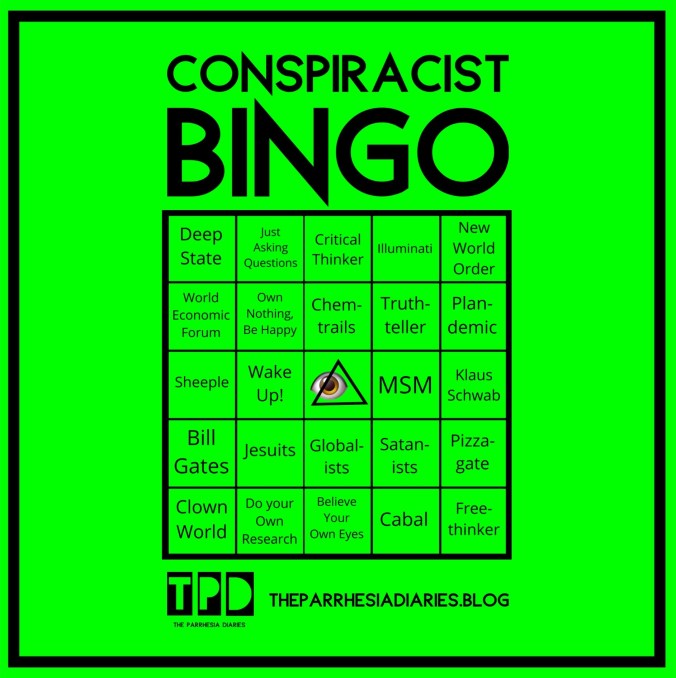
Conspiracist Bingo: Spot the Buzzwords, Win the Game!

Welcome to the ultimate game for the sleuthing Conspiracist Spotter: Conspiracist Bingo! It's a fun and light-hearted way to navigate the deep, dark rabbit holes of online chatter. Ever been told that "you'll own nothing and be happy" or referred to as a "sheep" by a "critical freethinker"? Well, now you can make it a fun game for you and your "normie" friends!

How to Spot Pseudoscience

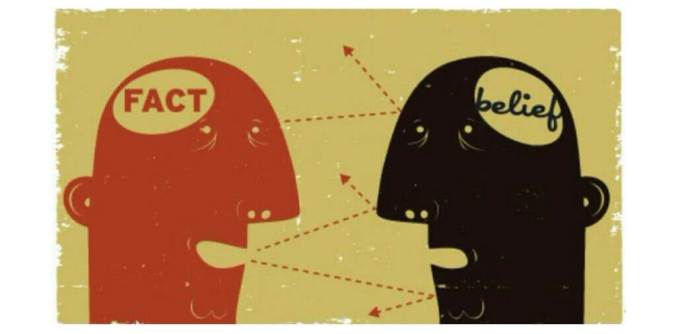
In this complex information age, distinguishing between rigorous scientific fact and veiled pseudoscience is a pressing challenge. In the vein of my previous writings on information pollution and cognitive biases, let us now consider a series of questions we can ask ourselves to gauge the scientific integrity of an idea or claim:

Systems Thinking: An Antidote to Conspiracism?

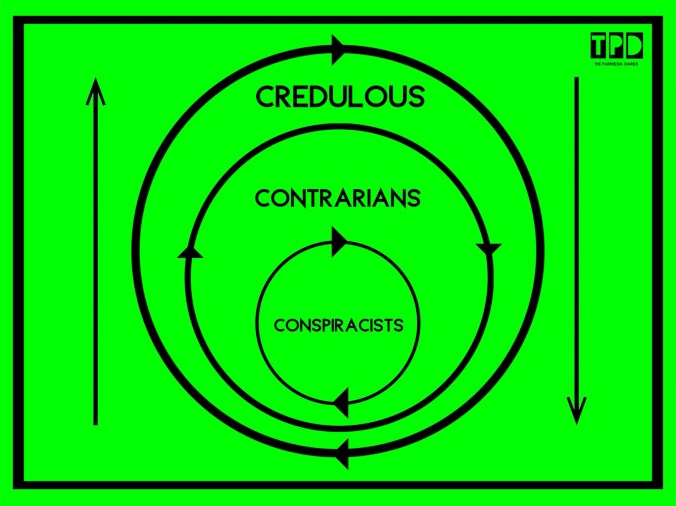
In recent years, a confluence of events, including the COVID-19 pandemic, the Russia-Ukraine conflict, increasing economic instability, global warming, and political corruption, have merged into what is now termed a poly-crisis or meta-crisis. This tumultuous landscape, rife with uncertainties, is deeply unsettling. As the mainstream falls short in explaining these events and the simultaneous occurrence of multiple crises, many people turn to alternative narratives in an attempt to understand what is happening.

New Year Reflections & Resolutions

Every year during the odd period between Christmas and the New Year when no one knows what day it is, I, like many others, spend that time reflecting on the year closing and considering the one about to begin. Aside from the more personal and professional changes I made this year, my big focus for 2022 was attempting to better embody the behaviours I believe can lead us to a saner, wiser, and more tolerant world.

How to Spot a Tribal Culture Warrior

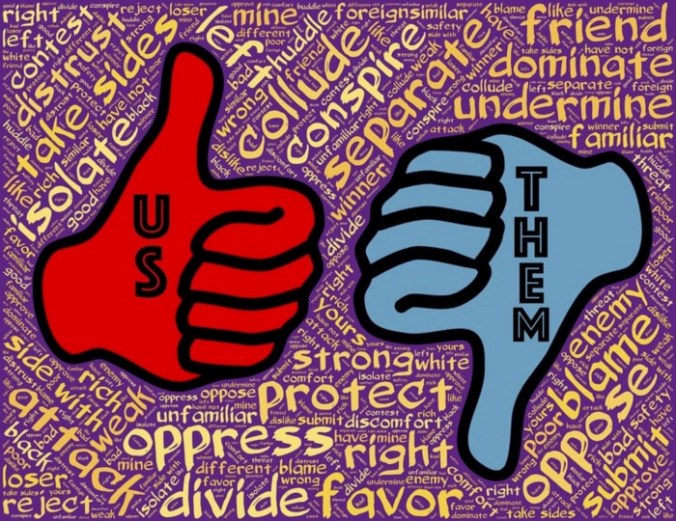
This is the third and final article in a short series on cleaning up the information environment. Part one can be found here, How to Fight Information Pollution, and part two here, How to Identify Your Cognitive Biases & Allergies. This one focuses on identifying unwitting (or witting) culture warriors parroting tribal narratives in the wild and online:

How to Identify Your Cognitive Biases & Allergies

This essay is the second in a short series about taking personal responsibility for improving the quality of the content circulating in the information environment. In essay one, ‘How to Fight Information Pollution’, we considered methods we can adopt to help ensure the information we share is integral and truthful. This second essay focuses on a process to help us gain greater awareness of our individual cognitive biases and allergies.

How to Fight Information Pollution

In this age of polarisation, disinformation and fake news, never before has it been so important that we carefully and thoughtfully evaluate the information we consume before we share it. I think of it as fighting “information pollution”.

The Transformation of Malcolm X

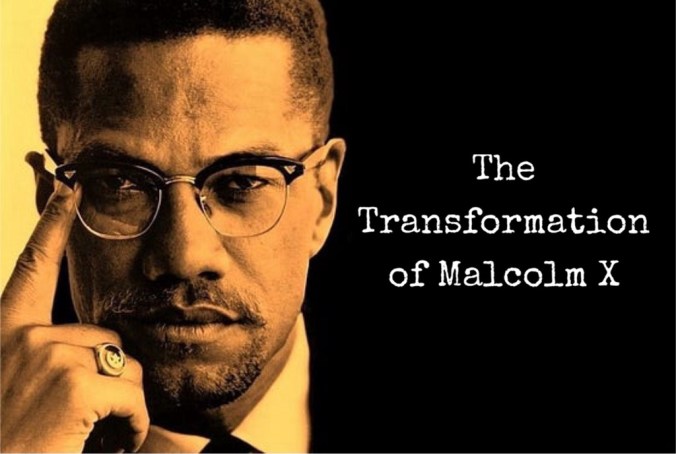
In the face of escalating cultural divisions and systemic crises, the urgency for us to learn how to effectively manage personal and societal transformation has never been greater. The life journey of Malcolm X, a prominent civil rights figure, offers a powerful prism through which we can examine this process. His personal evolution, closely mirroring the seismic societal shifts of his era, sheds light on the complex dynamics of transformative change, both on an individual and collective scale.

The Blind Men And The Elephant — a fable for our time?

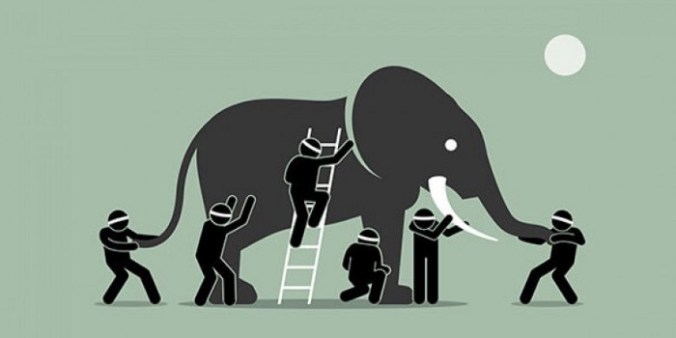
There is a well known Indian fable which supposedly dates back to the mid 1st millennium BC called The Blind Men And The Elephant. The fable tells the story of six blind sojourners who encounter different parts of an elephant on their life journeys. As the fable progresses, each blind man, in turn, conceptualises what the elephant is like by touching a different part of its body.

Why I left the Labour Party, or: How identity politics left me questioning who to vote for at the General Election.

Much has been written about the Labour Party, the crisis of the Left and progressive politics in general. I’m adding to it not because I claim to hold any authority on the subject, but from a compulsion to share my personal experience, and, as an ex-Labour member, my deep frustrations with the current situation in the party.

Is gender inequality a myth?

The notion that there are vast disparities in power and influence which favour men over women across all levels of society is so prevalent and commonsensical to us these days that to challenge the concept of the ‘patriarchy’ and to question the dominant narrative on gender inequality is, at best, a demonstration of ignorance, at worst, an act of misogyny.

Rediscovering Masculinity — A Contribution to the Gender Debate

One need only turn on the television, read the news or watch the latest Hollywood movies to realise a war is being waged against masculinity. The ideologically-loaded term “toxic masculinity”, with its shaming and demonising inferences about the male propensity to display aggression and dominance and the characterisation of male biological nature as an “illness”, is the latest line of attack.